
Everything you need to know about the upcoming Common University Entrance Test, the latest updates, and practical tips to ace the process (2024‑2025 perspective).
Why this advisory matters now
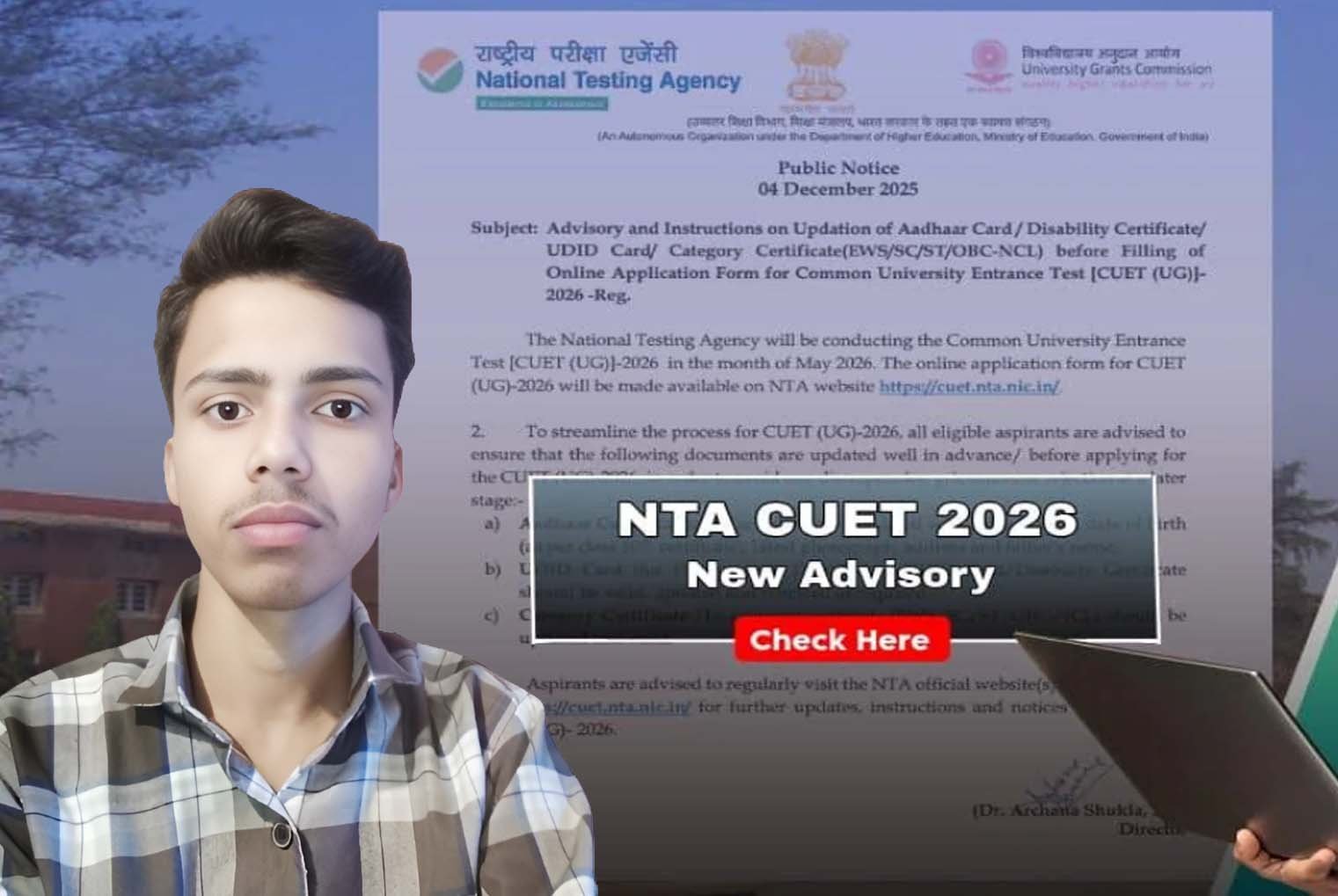
The National Testing Agency (NTA) just released an important advisory on 27 December 2025 for anyone planning to sit for CUET UG 2026. If you’ve been scrolling through countless forums, you’ll notice the same recurring pain points: Aadhaar mismatches, name‑discrepancies, and last‑minute confusion about where to find the syllabus. The fresh notice tackles all of those head‑on, aiming to smooth out the application journey before the exam rolls out in the third week of May 2026.
In short, the advisory is NTA’s way of saying, “We’ve heard your complaints, here’s a clear roadmap.” For aspirants, that means fewer roadblocks, more time to focus on studying, and a better chance of securing a seat at one of the 47 central universities or the 300+ affiliated colleges that use CUET for undergraduate admissions.


Below, we break down the most crucial take‑aways, sprinkle in some up‑to‑date trends, and give you actionable tips you can start using today.
1. The timeline at a glance
| Milestone | Approx. Date | What you should be doing |
|---|---|---|
| Advisory release | 27 Dec 2025 | Read the notice, bookmark NTA sites |
| Application window opens | Early‑Feb 2026 (expected) | Gather documents, update Aadhaar |
| Last date to submit | Mid‑March 2026 (likely) | Double‑check all entries |
| Exam dates | 3rd week of May 2026 | Prepare for a Computer‑Based Test (CBT) |
| Result declaration | Late June 2026 | Apply for counseling/seat allotment |
Note: Exact dates will be posted on nta.ac.in and cuet.nta.nic.in. Keep checking weekly—NTA updates the portal in real time, and the list of participating universities can change.
2. Application basics – Do it right the first time
a. Where to apply
- Official portal only: https://cuet.nta.nic.in
- No third‑party agents, no “express” services. Using the official site protects you from scams and ensures your data (especially Aadhaar) is correctly captured.
b. Key documents you’ll need
| Document | Why it matters | Quick tip |
|---|---|---|
| Aadhaar (linked with UDID) | Primary identity and DOB verification | Update your Aadhaar before the portal opens. Use the UIDAI self‑service portal to edit name or address if needed. |
| Class‑10 mark sheet / certificate | Name verification (if different from Aadhaar) | Keep a scanned copy handy; the system will flag mismatches and give you a chance to resolve them on the spot. |
| Category certificate (if applicable) | Reservation eligibility | Upload a clear, colour‑scanned PDF; avoid photocopies that are too dark. |
| A recent passport-size photograph and the applicant’s signature | For the online application form | Ensure the image has a white background and a resolution of 300 DPI to prevent rejection |
c. Aadhaar quirks you must know
- Parents’ names are NOT on Aadhaar. The NTA advisory clarifies that you won’t be forced to fill father/mother names if they’re missing from the UIDAI database. Just enter them manually in the form.
- Name mismatch? If your Aadhaar name differs from your Class‑10 certificate, the application portal will pop up a “Resolve Name Discrepancy” window. Follow the on‑screen steps—usually you’ll need to upload a supporting document (e.g., a birth certificate) and the system will auto‑correct.
- Updating Aadhaar early saves headaches. The UIDAI allows up to three free updates per year. Use this window now; waiting until the application opens can cause last‑minute stress.
3. What’s new in CUET UG 2026? (Trends from 2024‑2025)
- 13 language options, both domestic and overseas – The test will be offered in the same 13 mediums as last year, but NTA has added two more regional language centers abroad (in the Gulf and Southeast Asia). If you’re an NRI student, this widens your options.
- Computer‑Based Test (CBT) enhancements – The platform now supports adaptive navigation. While the question pool remains fixed, the interface remembers your flagged questions, letting you revisit them without losing time. Practice on the official mock test portal to get comfortable with the “Mark for Review” feature.
- Dynamic university list – Unlike earlier years, the participating universities are no longer a static list. NTA will release quarterly updates on its website. This means you can target emerging programs (e.g., Data Science at newly upgraded central universities) that weren’t on the 2025 list.
- Syllabus transparency – The complete syllabus is downloadable as a single PDF (≈ 23 pages) on the CUET portal. It’s broken down into Language, Domain (Science/Arts/Commerce), and General Tests. In 2024‑2025, students reported that the General Test now includes a Data Interpretation section – a trend that’s expected to continue.
- Result analytics – NTA will again publish the top‑five aggregate scores rather than individual toppers. This gives a realistic benchmark: the highest aggregate in 2025 was 1225.93 out of a possible 1500. Use these numbers to set your own target.
4. Practical study plan – From syllabus to mock test
- Map the syllabus to your strengths
- Create a three‑column table: Subject → Weightage → Current score.
- Focus on low‑score, high‑weightage topics first (e.g., “Logical Reasoning” in the General Test, which carries 30 marks).
- Leverage the CBT mock platform
- Register on https://cuet.nta.nic.in/mocktest (free).
- Simulate the exact exam environment: 3 hours, timed sections, no pausing.
- Review the analytics after each mock – NTA now provides heat‑maps of the questions you spent most time on.
- Aadhaar‑ready checklist (do this a month before the deadline)
- Verify your name, DOB, and address on the UIDAI portal.
- Download the e‑Aadhaar PDF and keep it on your phone for quick reference.
- If you’ve changed schools, get a Transfer Certificate that matches your Aadhaar name.
- Stay updated
- Follow NTA’s official Twitter handle (@NTA_Official) and subscribe to their Telegram alerts.
- Join the CUET UG 2026 Facebook group where administrators often repost the latest university list and cutoff trends.
5. Frequently Asked Questions (FAQs)
Q1. What happens if my father’s/mother’s name is not on Aadhaar?
A: You won’t be required to fill it in the online form. The advisory explicitly states that the application system will accept the name fields even if they’re missing from the UIDAI database. Just type the names as they appear on your school certificate.
Q2. Can I change my chosen subjects after submitting the application?
A: No. Once you click Submit, the subject combination is locked. However, if you spot a genuine mistake (e.g., wrong language code), you can raise a Correction Request within 24 hours via the NTA helpline. The success rate is low, so double‑check before final submission.
Q3. How many universities can I apply to through CUET?
A: Technically, you can select up to 20 universities/colleges in the application portal. Choose a mix of safety, target, and aspirational options. Remember, the university list updates every quarter, so you might want to revisit your selections before the final submission deadline.
Q4. Is there any advantage to appearing for CUET in a language other than English?
A: If you are comfortable in another medium, you’ll likely score higher in the Language Test component. The overall weight of the language section is 30 marks, so a strong performance can boost your aggregate. Just ensure you’re equally prepared for the General and Domain tests.
6. Final thoughts – Turn the advisory into an advantage
The NTA advisory for CUET UG 2026 isn’t just a bureaucratic note; it’s a roadmap that can shave days off your preparation timeline. By updating your Aadhaar early, double‑checking name details, and staying glued to the official portals, you eliminate the most common application hiccups.
Remember, the exam itself is a computer‑based test with a fixed question pool, but the environment is evolving—adaptive navigation, richer analytics, and more language options. Treat the mock tests as a rehearsal, not a one‑off drill. And keep your eyes on the dynamic university list; a new program could be the perfect fit for your career goals.
In the end, CUET UG 2026 is your ticket to a central university education, and with the right strategy, the process can be as smooth as scrolling through your favourite streaming app. So grab that checklist, update your Aadhaar, and start ticking those syllabus boxes. Good luck, and see you in the CBT arena next May!
- RVUNL Technician‑III (ITI) Recruitment 2025 – 2,163 Posts, Apply Now
- RRB ALP CEN 01/2025 Answer Key 2026 – Official Download & Objection Details
- बिहार बोर्ड 12वीं परिणाम 2026 कब आएगा? रेज़ल्ट चेक, पासिंग मार्क्स, टॉपर्स लिस्ट – लेटेस्ट अपडेट
- RPSC Combined Competitive Exam 2024 Result: Provisional Interview List & Application Dates
- Western Railway Cultural Quota 2026 Result – Provisional List, Document Verification & Practical Demo Details
bihar btsc junior engineer (je) recruitment 2026 bihar btsc junior engineer 2026 bihar btsc junior engineer vacancy 2026 bihar btsc sports trainer bihar police si admit card 2025 bihar police si pre admit card bpssc si admit card 2026 btsc sports trainer apply online btsc sports trainer apply online 2026 btsc sports trainer bharti 2026 btsc sports trainer recruitment 2026 btsc sports trainer shorts btsc sports trainer syllabus btsc sports trainer vacancy 2026 ctet feb 2026 ctet feb 2026 apply online ctet feb 2026 cdp ctet feb 2026 eligibility ctet feb 2026 exam date ctet feb 2026 exam date change ctet feb 2026 form ctet feb 2026 lets learn ctet feb 2026 news ctet feb 2026 notification ctet feb 2026 online form ctet feb 2026 preparation ctet feb 2026 strategy ctet feb exam 2026 ctet february 2026 ctet february 2026 exam ctet february exam 2026 ctet notification feb 2026 ctet upper primary 2026 government recruitment protection officer how to fill ctet online form 2026 navy ssc officer protection officer recruitment protection officer rpsc rpsc protection officer rpsc protection officer exam rpsc protection officer gs uppsc medical officer & other posts online form 2025 uppsc medical officer syllabus 2026 uppsc medical officer vacancy 2026 uttar pradesh