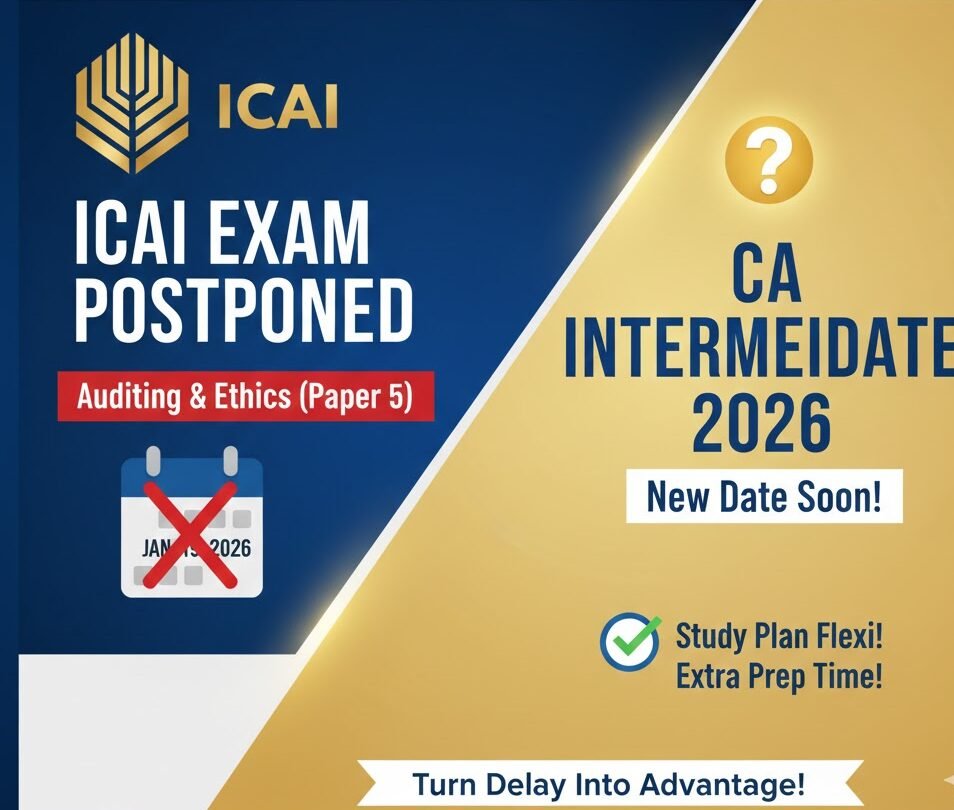

If you’re gearing up for the Chartered Accountant Intermediate exam, you’ve probably seen the headline: the ICAI has pushed back the Group II Paper 5 (Auditing & Ethics) that was slated for 19 January 2026. The announcement has raised a lot of questions, especially for those who have built their study timetable around the original dates. In this article we break down what the postponement means, why it matters, and how you can turn the extra weeks into a real advantage.
1. Quick recap of the latest ICAU notice
- Original schedule: Paper 5 was initially set for 15 January 2026, then moved to 19 January 2026 because of the Maharashtra municipal elections.
- Current status: The Institute of Chartered Accountants of India (ICAI) issued an “unavoidable circumstances” notice on 23 September 2025 (updated on 27 December 2025) stating that the exam on 19 January 2026 is postponed for all centres in India and abroad.
- What stays the same: Every other paper in the January 2026 session—Foundation, Intermediate (Group I & Group II other papers), and CA Final—remains on the announced dates.
The revised date will be released “soon”, so keep an eye on the official portal (www.icai.org) and your institute’s communication channels.
2. Why the postponement matters
A. Core subject, high stakes
Auditing & Ethics isn’t just another paper; it’s the foundation of professional conduct for future chartered accountants. The syllabus covers:
- International Standards on Auditing (ISA) and Indian Auditing Standards (IAS)
- Audit planning, risk assessment, and substantive procedures
- Professional ethics, independence, and the Code of Conduct
A strong performance here opens doors to audit firms, consultancy houses, and corporate governance roles. Any change in the exam date therefore impacts how you allocate revision time and manage stress.
B. Ripple effect on study plans
Most coaching institutes release a “revision calendar” that aligns with the original exam dates. When one paper moves, the whole timeline can shift:
- Earlier revision: If you had planned a final sprint from 10 January to 18 January, you now have a gap that can be used productively or may create a lull that leads to loss of momentum.
- Mock test scheduling: Many centres run a mock on 13 January. With the official paper delayed, you can either treat the mock as a final practice or schedule another full‑length test closer to the new date.
C. Administrative considerations
- Observation filing: ICAI allows candidates to lodge observations about exam papers until 27 January 2026. The postponement does not affect this window, so you still have time to raise any concerns about question quality, especially if you spot inconsistencies in previous years.
- May 2026 registrations: The next exam session (May) will open on 3 March 2026. Whether you aim to clear Paper 5 in the rescheduled January slot or postpone to May, you need to decide now to avoid missing the registration deadline.
3. Turning the extra weeks into a competitive edge
1. Deep‑dive into emerging audit trends
The audit landscape has been transformed by technology. Use the postponement to explore topics that are now appearing in the syllabus but often get skimmed:
| Trend | Why it matters for Paper 5 | Practical way to study |
|---|---|---|
| Data analytics in audit | ISA 520 now expects auditors to evaluate data‑driven evidence. | Run a small data‑analytics project on a sample Excel sheet, using tools like Power Query or Python pandas. |
| Environmental, Social & Governance (ESG) reporting | New standards (e.g., SASB, GRI) intersect with audit risk assessment. | Read a recent ESG audit report of a listed company and note how auditors addressed materiality. |
| Artificial intelligence (AI) & automation | AI‑enabled audit software can affect auditor independence and professional scepticism. | Watch a short webinar on AI‑assisted audit procedures, then write a one‑page summary linking it to the Ethics code. |
2. Reinforce weak pillars with targeted practice
- Create a “knowledge map.” List all major topics (audit planning, audit evidence, professional ethics, etc.) and rate your confidence on a 1‑5 scale.
- Allocate 60 % of the extra time to low‑score areas. For example, if “audit risk assessment” feels shaky, spend three focused sessions (2 hours each) solving related MCQs and case studies.
- Use past‑year papers strategically. Instead of doing a straight‑through solve, pick only the sections that test your weak topics.
3. Simulate exam conditions
A common mistake after a postponement is to become complacent. Schedule at least two full‑length mock exams under timed, no‑distraction conditions. After each mock:
- Review every answer, not just the wrong ones.
- Note patterns: Are you losing marks on ethics questions because of misreading the Code?
- Adjust your revision plan based on this feedback loop.
4. Mind‑body balance
Extended preparation periods can lead to burnout. Incorporate short breaks, light exercise, or mindfulness techniques. A 10‑minute walk after each study block helps consolidate memory and reduces anxiety.
4. What’s new in Auditing & Ethics for 2026?
While the ICAI syllabus doesn’t change overnight, the industry context does, and exam setters often reflect that reality. Here are three trends you’ll likely encounter in 2026 paper questions:
- Digital audit trails – Expect scenario‑based questions that ask you to evaluate the reliability of electronic evidence.
- Integrated reporting – The “dual‑reporting” concept (financial + ESG) is gaining traction; ethics questions may probe independence when auditors advise on sustainability disclosures.
- Remote audit engagements – With hybrid work models, auditors now face challenges around data security, client‑auditor communication, and documentation.
Understanding these trends helps you not only answer the static syllabus questions but also impress examiners with contextual awareness.
5. Practical checklist for the next few weeks
- Confirm the revised date – Set a calendar reminder to check the ICAI site every morning.
- Update your revision timetable – Shift the “final sprint” to end a day before the new exam date.
- Add one new study activity each week – e.g., data‑analytics mini‑project, ESG report review, AI audit tool demo.
- Schedule two full mock exams – Aim for one three weeks before the new date and another one week before.
- Maintain health rituals – Sleep 7‑8 hours, hydrate, and do a 15‑minute stretch after each study block.


Important Links
| Resource | Description | Action |
|---|---|---|
| WhatsApp Channel | Join our official updates channel | Join Now |
| ICAI Official Notifications | Central hub for all exam announcements, dates, and guidelines | Visit ICAI |
6. Closing thoughts
A postponed exam can feel like an unwelcome curveball, but it also hands you a rare gift: extra, uninterrupted time to deepen your mastery. By focusing on emerging audit technologies, reinforcing weaker concepts, and simulating real exam pressure, you’ll walk into the rescheduled Paper 5 not just prepared, but confident.
Stay alert for the official date, keep your study plan flexible, and treat this pause as a strategic advantage rather than a setback. With the right mindset and a solid action plan, you’ll turn this postponement into a stepping stone toward a successful CA career in 2026 and beyond. Good luck!
Frequently Asked Questions
When will ICAI announce the new date for Paper 5?
The institute has promised an announcement “in a few days”. Keep checking the official ICAI website and your coaching centre’s alerts daily.
Do I have to re‑pay the exam fee if the paper is rescheduled?
No. The fee you paid for the January 2026 session covers all papers, even if one is postponed.
Will the postponement affect the results declaration timeline?
Typically, ICAI releases results within two weeks of the exam. The new date will push the result announcement accordingly, but it won’t impact the May 2026 result schedule.
Can I switch to the May 2026 session for Paper 5?
Yes, but you’ll need to re‑register for the May session before the March 3 deadline and pay any applicable fee differences.
Is there any penalty for missing the observation filing deadline?
If you have genuine concerns about the exam paper, filing after 27 January 2026 may not be considered. Make sure to send any observations well before that date.