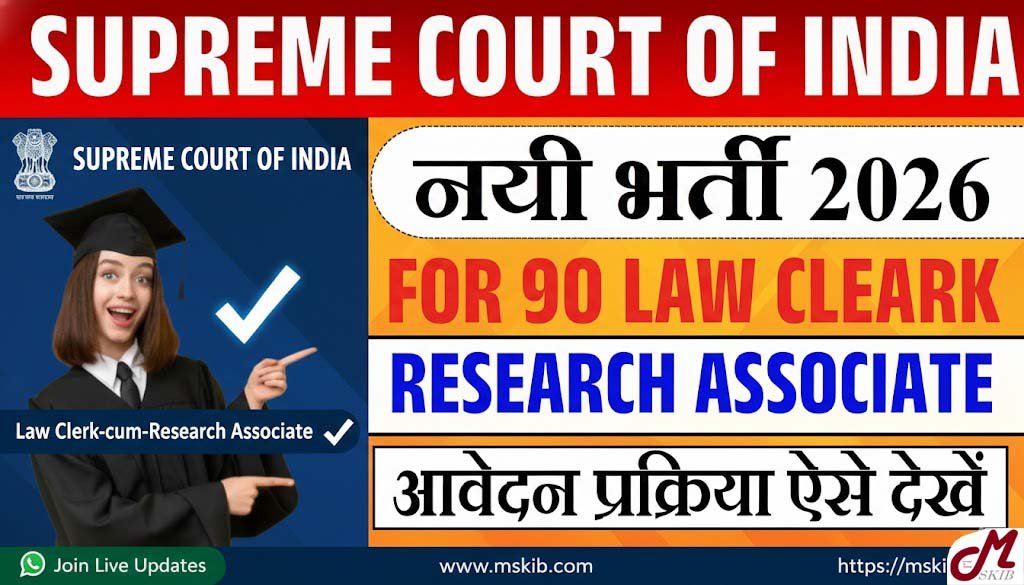

If you’ve been watching the legal‑career market in India, you’ll know that the Supreme Court’s Law Clerk posts are among the most coveted entry‑level opportunities for fresh LLB graduates. In early 2026 the Court announced a fresh batch of openings – 90 positions in total – and the application window is now open. Below we break down the key details, walk you through the online‑application process, and share insider tips that can help you stand out.
Why a Law Clerk Position at the Supreme Court Matters
A law clerk in the apex court isn’t just a job; it’s a front‑row seat to the nation’s most important legal battles. You’ll be drafting judgments, researching precedent, and assisting judges with case management. The experience can fast‑track a legal career, open doors to higher judicial services, or even launch a thriving practice.
Pro tip: Even a single year of clerkship can add a “Supreme Court” badge to your résumé that many private‑firm recruiters find irresistible.
Quick Snapshot – The 2026 Notification
| What | Details |
|---|---|
| Post | Law Clerk Cum Research Associate |
| Number of Posts | 90 |
| Application Window | 20 January 2026 – 07 February 2026 |
| Exam Date | 07 March 2026 |
| Age Limits (as on 07 Feb 2026) | Minimum 20 years – Maximum 32 years (with standard relaxations) |
| Eligibility | Final‑year LLB or LLB graduate from a recognised university |
| Application Fee | ₹ 750 (all categories) |
| Selection Stages | 1️⃣ Objective written test 2️⃣ Subjective written test 3️⃣ Personal interview 4️⃣ Document verification 5️⃣ Medical examination |
All dates are subject to change, so always double‑check the official Supreme Court website before you mark your calendar.
Step‑by‑Step Guide to Filling the Online Form
- Create an Account – Visit the Supreme Court’s recruitment portal, click “Registration”, and set a strong password. A confirmation email will land in your inbox; verify it right away.
- Log In & Access the Application – Use your newly created credentials to log in. Look for the “Law Clerk 2026” tile and click “Apply Now.”
- Enter Personal & Educational Details – The form asks for basic data (name, DOB, contact), followed by academic information. Be meticulous: a typo in your LLB roll number can lead to rejection later.
- Upload Required Documents – You’ll need a scanned passport‑size photo, signature, LLB mark sheet, and any age‑relaxation certificates (if applicable). PDFs under 200 KB are ideal.
- Pay the Application Fee – The portal accepts Debit/Credit cards, Internet banking, IMPS, and mobile wallets. A ₹ 750 transaction receipt is generated automatically – download and keep it safe.
- Review & Submit – Before clicking “Submit,” run through every field. Once submitted, you’ll receive an acknowledgment number. Save this number; you’ll need it for future status checks.
- Print the Confirmation – Although the process is digital, a printed copy of the acknowledgment can be handy during document verification.
Example: Rahul, a recent LLB graduate from Delhi University, missed the “review” step and had his name spelled “Rahuul.” The clerical error caused his form to be flagged, and he lost a valuable day. Always proofread!
Preparing for the Selection Process
1️⃣ Part‑I Objective Test
- Pattern: Multiple‑choice questions covering Constitutional Law, Criminal Law, Civil Procedure, and General Knowledge.
- Tip: Practice with previous Supreme Court clerkship papers (available on the court’s archive). Time‑management is crucial; aim to answer each question in under 45 seconds.
2️⃣ Part‑II Subjective Test
- Pattern: Short answer and essay‑type questions that test analytical writing.
- Tip: Write mock answers within a 30‑minute window. Focus on clarity, logical flow, and citation of statutes.
3️⃣ Personal Interview
- Focus: Your motivation for joining the Supreme Court, understanding of judicial processes, and situational judgement.
- Tip: Prepare a 2‑minute “elevator pitch” that links your academic projects or internships to the clerk’s responsibilities.
4️⃣ Document Verification & Medical Exam
- What to Bring: Original certificates, caste/physically‑handicapped certificates (if applying for relaxation), and a recent medical fitness certificate.
Real‑World Example: How a Clerk’s Day Looks
Imagine you’re assigned to a pending civil suit involving a multi‑billion‑rupee contract dispute. Your tasks might include:
- Research: Pulling up prior Supreme Court judgments on “specific performance” and summarizing key points.
- Drafting: Preparing a concise note for the judge that outlines arguments from both parties.
- Coordination: Liaising with the court’s secretariat to ensure all documents are uploaded to the e‑filing system before the hearing.
This blend of research, writing, and coordination builds a skill set that’s highly marketable beyond the bench.
Insider Insights – What the Court Looks For
- Analytical Rigor: Judges value clerks who can break down complex statutes into digestible insights.
- Attention to Detail: A single citation error can undermine an entire judgment draft.
- Ethical Integrity: Confidentiality is non‑negotiable; any breach can lead to immediate disqualification.
If you can demonstrate these traits through your academic projects, moot‑court participation, or internships, you’ll have a strong edge.


Important Links
Below is a handy table that points you to the most useful resources for this recruitment cycle. Click the “Action” buttons to go straight to the pages.
| Resource | Description | Action |
|---|---|---|
| Supreme Court Recruitment Portal | Main hub for applying, checking status, and downloading admit cards. | Registration | Login |
| WhatsApp Channel | Join our official updates channel | Join Now |
| Official Notification PDF | Full text of the 2026 Law Clerk notification (PDF). | Download |
| Official Website | Visit Now | |
Final Thoughts
The Supreme Court Law Clerk recruitment for 2026 is more than just another job posting; it’s a launchpad for ambitious legal minds. By meeting the age and education thresholds, submitting a clean online application before 07 February, and preparing rigorously for the multi‑stage selection process, you can turn this opportunity into a career‑defining milestone.
Remember: the Supreme Court’s official website is the single source of truth for dates, fee structures, and result announcements. Keep the portal bookmarked, set reminders for each deadline, and use the resources above to stay organized.
Frequently Asked Questions (FAQs)
Do I need to be a resident of Delhi to apply?
No. The recruitment is open to candidates from all states, provided they meet the age and educational criteria.
What if I missed the 07 Feb 2026 deadline?
The notification states that late submissions will not be entertained. Keep an eye on the official site for any future vacancies.
Is there any reservation for SC/ST/OBC candidates?
Yes. The Supreme Court follows the standard reservation policy. Age relaxations and fee exemptions apply as per government guidelines.
Can I apply if I’m currently pursuing my LLB?
Absolutely – you may apply if you are in your final year, provided you can furnish proof of enrollment and expected graduation date.