
Introduction
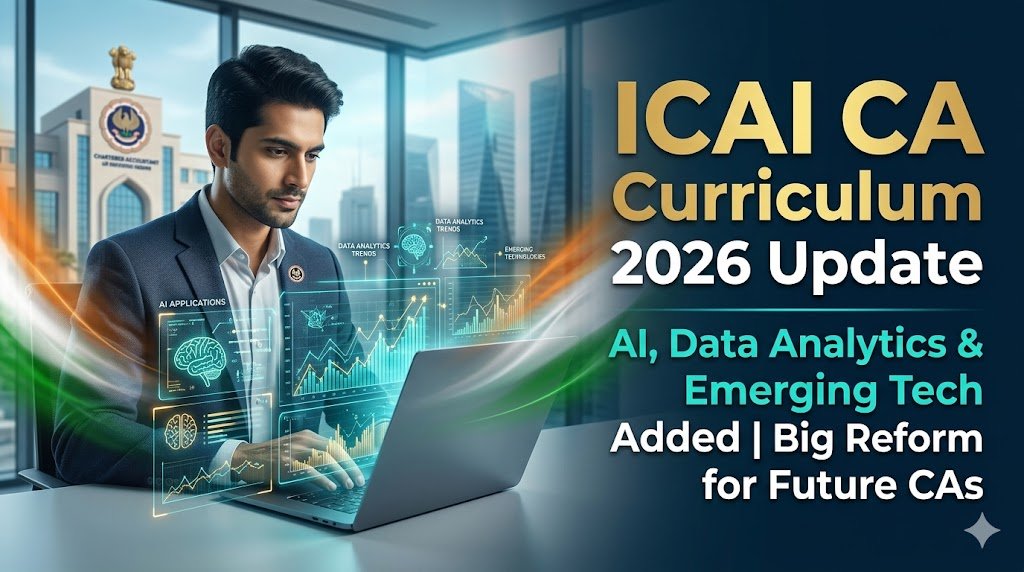
The Institute of Chartered Accountants of India (ICAI) has announced a decisive move to modernise the Chartered Accountancy (CA) education framework. In response to the rapid digitalisation of finance, the institute will incorporate Artificial Intelligence (AI), Data Analytics, ESG, sustainability, and forensic auditing into the core syllabus. This initiative, driven by ICAI President Prasanna Kumar D, aims to equip the nation’s ~5 lakh members and the lakhs of CA aspirants with the technological competence required in today’s data‑driven business environment.
Why the Change Is Urgent
| Current Landscape | Emerging Demand |
|---|---|
| Traditional CA syllabus focuses on financial reporting, taxation, audit, and law. | Companies increasingly rely on AI‑enabled tools for risk assessment, predictive analytics, and ESG reporting. |
| Limited exposure to data‑analytics software and AI concepts. | Chartered accountants are expected to interpret large data sets, automate routine tasks, and advise on sustainability strategies. |
| Soft‑skill training is confined to communication and ethics. | Employers seek professionals proficient in digital communication, data storytelling, and technology governance. |
The table highlights the gap between existing curriculum components and the skill sets now demanded by industry.
Key Elements of the Revised Curriculum
1. Artificial Intelligence (AI) Module
- Scope: Fundamentals of AI, machine learning basics, AI‑driven audit tools, and ethical considerations.
- Learning Outcomes: Ability to evaluate AI applications in financial analysis, risk management, and decision‑making.
2. Data Analytics & Visualization
- Scope: Statistical techniques, data mining, use of analytics platforms (e.g., Power BI, Tableau), and data‑driven audit procedures.
- Learning Outcomes: Competence in extracting insights from large datasets, preparing analytical reports, and supporting strategic recommendations.
3. Environmental, Social & Governance (ESG) & Sustainability
- Scope: ESG reporting standards, sustainability accounting, carbon accounting, and impact assessment.
- Learning Outcomes: Capability to guide clients on ESG disclosures, sustainability metrics, and regulatory compliance.
4. Forensic Auditing & Cyber‑Risk
- Scope: Fraud detection techniques, cyber‑security fundamentals, digital evidence handling.
- Learning Outcomes: Skills to conduct forensic investigations using digital tools and to advise on cyber‑risk mitigation.
5. Enhanced Soft‑Skill & Communication Training
- Scope: Data storytelling, stakeholder communication, and professional ethics in a tech‑enabled environment.
The Review Process – Committee for Review of Education and Training (CRET)
ICAI has constituted the Committee for Review of Education and Training (CRET) to evaluate the existing syllabus and recommend the integration of the above subjects. The committee’s mandate includes:
- Syllabus Review: Mapping current subjects against industry trends.
- Practical Training Structure: Incorporating hands‑on projects with AI and analytics tools.
- Examination Methods: Updating assessment patterns to test analytical and technological competence.
- Timeline: CRET is expected to finalize its recommendations by December (year to be announced).
Once the draft is ready, ICAI will publish the proposals for public feedback, ensuring transparency and stakeholder participation.
Expected Impact on CA Aspirants & Professionals
- Enhanced Employability: Graduates will be better positioned for roles in finance transformation, data‑driven audit, and ESG consulting.
- Future‑Ready Skill Set: Exposure to AI and analytics will reduce the learning curve for fresh entrants into corporate finance and consulting firms.
- Industry Alignment: The curriculum will mirror the digital strategies of leading Indian and global enterprises, fostering a smoother transition from academia to practice.
- Professional Credibility: ICAICertified chartered accountants will gain a competitive edge, reinforcing the CA designation as a benchmark of modern financial expertise.
How Students Can Prepare Right Now
- Enroll in Online AI & Data Analytics Courses – Platforms such as Coursera, edX, and NPTEL offer introductory modules that align with the upcoming syllabus.
- Familiarise with ESG Frameworks – Study GRI, SASB, and TCFD guidelines to grasp sustainability reporting basics.
- Participate in Workshops & Webinars – ICAI’s regional centres frequently host tech‑focused sessions; keep an eye on announcements.
- Develop Soft‑Skill Proficiency – Practice data storytelling through case studies and presentation drills.


Important Links
- Join WhatsApp Group: Click Here
- Join Telegram Channel: Click Here
- Join Current Affairs Quiz: Click Here
Conclusion
The ICAI’s decision to weave AI, data analytics, ESG, and forensic auditing into the CA curriculum marks a watershed moment for India’s accounting profession. By aligning education with the digital realities of modern business, the institute not only safeguards the relevance of the CA designation but also empowers a new generation of chartered accountants to lead the financial transformation of the nation. Stakeholders—students, educators, firms, and regulators—must collaborate to ensure a smooth rollout and maximise the benefits of this forward‑looking reform.
When will the new AI and data‑analytics modules be introduced in the CA syllabus?
The Committee for Review of Education and Training (CRET) is slated to complete its recommendations by December. The exact implementation date will be announced after the public feedback phase.
Will the existing CA students need to retake any exams because of the curriculum change?
No. The revised subjects will be incorporated into the new scheme of education and training. Current students will continue under the existing syllabus, while fresh entrants will follow the updated curriculum.
How can CA aspirants gain early exposure to AI and data analytics before the curriculum is officially updated?
Aspirants can enrol in online courses, attend ICAI‑organised workshops, and practice using analytics tools such as Power BI or Tableau to build foundational skills.
What role will ESG and sustainability play in the upcoming CA syllabus?
ESG and sustainability will become a dedicated subject area, covering reporting standards, carbon accounting, and the integration of non‑financial metrics into audit and advisory services.
Will the new curriculum affect the CA examination pattern?
Yes. ICAI plans to revise examination methods to assess technological competence, including case‑based questions on AI applications, data‑analysis projects, and ESG reporting scenarios.