
The Big Hook (Introduction):
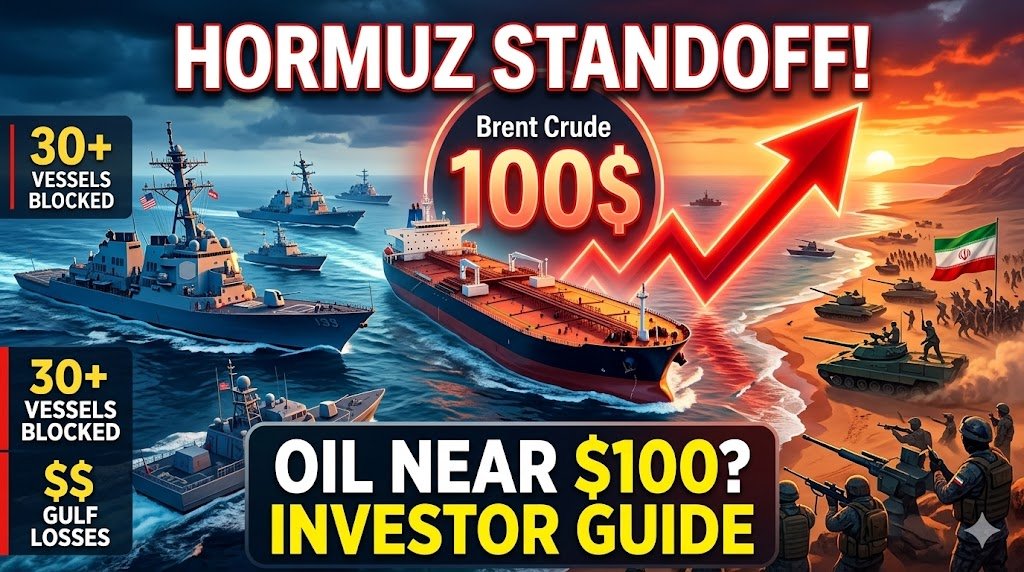
The Strait of Hormuz—through which roughly 20 percent of the world’s petroleum passes—has become a flashpoint that could rewrite the risk‑reward calculus for every energy‑focused investor. A U.S. naval blockade, kept in place despite mounting diplomatic pressure, is persisting because Tehran refuses to lift its “under duress” demand for an immediate end to the choke‑hold. As the blockade stretches beyond 30 interdicted vessels, Brent crude is flirting with the psychologically significant $100 per barrel threshold, and Gulf economies are watching their oil‑revenue lifelines shrink by billions. In this exclusive deep‑dive we unpack the strategic calculus of Washington and Tehran, translate the on‑the‑ground logistics into market signals, and explain why the next few weeks could decide whether oil stays a “buy‑the‑dip” story or turns into a prolonged volatility nightmare.
1. The Big Picture: Why Is the Hormuz Blockade Trending?
The standoff began after the United States, under President Donald Trump’s “maximum‑pressure” doctrine, ordered naval forces to deny Iranian‑flagged tankers entry into the strategic waterway. Tehran, in turn, has made a non‑negotiable demand: lift the blockade before any meaningful talks resume. Former Indian Ambassador to Iran D P Srivastava warned that Tehran “will not return to negotiations unless the blockade is lifted,” framing its stance as a negotiation under duress.
From a macro‑economic perspective the blockage is a double‑edged sword. On one side, it squeezes Iranian oil exports—already hamstrung by sanctions—potentially eroding the regime’s fiscal base. On the other, it threatens the uninterrupted flow of crude from Saudi Arabia, the United Arab Emirates, and Kuwait, whose export routes also thread the strait. The immediate market reaction has been a rally in Brent and WTI futures, nudging prices toward $100 a barrel, while freight analysts at Kpler warn that the economic pain for Iran may not manifest for “another two to three months” because of existing cargoes en route to China.


The geopolitical ripple extends beyond oil. More than 30 ships have been blocked by U.S. Central Command, Iranian forces have seized multiple commercial vessels, and both sides have engaged in limited maritime skirmishes. The resulting uncertainty is inflating insurance premiums for tankers, prompting some shippers to consider longer, costlier routes around the Cape of Good Hope—an operational shift that could add $10‑$15 million per voyage to global logistics costs.
2. Hormuz Blockade At a Glance (Key Highlights)
| Feature / Metric | Crucial Details |
|---|---|
| Event | U.S. naval blockade of Strait of Hormuz |
| Stakeholders | United States, Iran, Gulf Cooperation Council (GCC) nations, global oil buyers |
| Ships Blocked (US CENTCOM data) | > 30 vessels denied entry |
| Current Brent Crude Price | ≈ $100 / barrel (mid‑April 2026) |
| Iranian Export Capacity Impact | Billions USD of lost revenue; aging fields may be shut down if exports stay constrained |
| Projected Timeline for Economic Pain | 2‑3 months until existing cargoes are exhausted; longer blockade → “real” pressure |
| Risk Level | High – geopolitical, supply‑chain, and price‑volatility risk |
3. Deep‑Dive Analysis: What the Numbers Actually Mean
3.1 Oil‑Price Mechanics
When a chokepoint that carries a fifth of global oil supply is threatened, the market reacts on two fronts: supply‑side scarcity and risk premium. The near‑$100 barrel price is not solely a reflection of reduced physical supply; it also embeds a premium for the possibility of a sudden, prolonged disruption. Historical analogues—such as the 2019–2020 Hormuz incidents—show that even a 10‑percent perceived risk can push Brent an extra $5‑$8 per barrel. For investors, this translates into higher forward‑curve valuations for oil‑related equities and ETFs, but also amplifies the volatility index (OVX) that tracks oil‑price swings.
3.2 Iranian Export Resilience
Matt Wright of Kpler highlights that Iran still has “significant volumes of crude already in transit towards key buyers such as China.” This cargo backlog means that, for the next 60‑90 days, Iran can continue to monetize oil at market rates, cushioning the immediate fiscal impact. However, Wright cautions that no definitive evidence exists that Iranian tankers have successfully evaded the blockade. Vessels that have switched off AIS (Automatic Identification System) are still being tracked via satellite imagery, and any proven breach would signal a weakening of U.S. enforcement—potentially prompting a rapid de‑escalation of oil prices.
3.3 Regional Spill‑over Effects
Sanjeev P. Yadav of Banyan Tree Global points out that the blockade’s “leverage” is eroding for Iran by the day, while Gulf allies—Saudi Arabia, UAE, Oman—are experiencing short‑term revenue dips. Their economies, heavily dependent on oil export taxes, may see fiscal deficits swell if the strait remains partially closed for more than a quarter. In response, we can anticipate budget re‑allocations toward sovereign wealth fund withdrawals and increased sovereign bond issuance, which could present yield opportunities for fixed‑income investors seeking exposure to the GCC.
3.4 Operational Costs & Shipping Routes
Mine‑clearing operations, as reported by maritime security firms, could take months. In the interim, shippers may divert around the Cape of Good Hope, adding ~15 % to voyage time and $10‑$15 million to freight costs per super‑tanker. The resultant surge in freight rates (e.g., VLCC spot rates climbing above $30,000 per day) feeds back into the oil price equation, as higher transportation costs are passed onto end‑users.
Overall, the data suggest a two‑phase risk profile: an initial price spike driven by market fear, followed by a possible stabilization if diplomatic breakthroughs occur, or a prolonged high‑volatility regime if the blockade endures beyond the next quarter.
4. Eligibility Criteria & Hidden Charges Explained
The blockade is not a financial product, but investors looking to gain exposure must understand the entry barriers and hidden costs associated with related assets.
Who Can Invest?
- Institutional investors, hedge funds, and high‑net‑worth individuals with access to oil‑futures, energy ETFs, or sovereign bond markets.
- Retail investors may gain indirect exposure via commodity‑linked ETFs (e.g., USO, XLE) or through ADRs of major oil majors (e.g., ExxonMobil, Chevron).
Required Documents for Direct Commodity Futures:
- Completed brokerage account application
- Proof of identity (PAN, passport)
- Income and net‑worth statements for margin eligibility
| Fee Type | Amount / Percentage |
|---|---|
| Brokerage Commission (Futures) | 0.02 % – 0.05 % of contract value (varies by broker) |
| Margin Requirement (Initial) | 5 % – 10 % of contract value (higher for volatile periods) |
| Roll‑over/Swap Charges | Typically $0.10‑$0.25 per barrel for month‑to‑month contracts |
| ETF Management Fee | 0.30 % – 0.75 % annual expense ratio (depending on fund) |
5. The Bull vs. Bear Case (Pros & Cons)
Before allocating capital, weigh the strategic upside against the inherent risks.
✅ The Upside (Pros):
- Price Appreciation Potential: Continued pressure could push Brent above $105 / barrel, delivering strong returns for long‑dated oil futures and energy equities.
- Strategic Diversification: Exposure to a geopolitical‑driven commodity adds a non‑correlated asset class to portfolios heavily weighted in equities or bonds.
⚠️ The Downside (Cons/Risks):
- Escalation Risk: A sudden military confrontation could trigger a supply shock far larger than current price movements, leading to extreme volatility and possible market closures.
- Regulatory & Sanctions Exposure: Companies operating in the region may face secondary sanctions, increasing compliance costs and potentially resulting in asset write‑downs.
6. Step‑by‑Step Guide: How to Gain Energy Exposure Securely
- Official Portal: Open a SEBI‑registered brokerage platform (e.g., Zerodha, ICICI Direct).
- Locate the Section: Navigate to the “Commodities & Futures” tab for crude oil contracts or “ETFs & Mutual Funds” for energy‑focused products.
- Review Documents: Read the Product Disclosure Statement (PDS) for ETFs or the Futures Contract Specification for crude.
- Fill & Authenticate: Enter the desired contract size or fund units, complete KYC verification, and set your margin preferences.
- Final Submission: Confirm the trade, capture the Transaction Reference Number, and monitor position via the broker’s dashboard.
Tip: Consider using stop‑loss orders at 5‑% below entry price to mitigate sudden downside spikes.
7. Final Verdict: Is the Hormuz Blockade Worth Your Money?
The blockade is a high‑risk, high‑reward catalyst for oil‑related assets. For investors with a tolerance for volatility and a strategic horizon of 6‑12 months, the current price trajectory offers a compelling entry point—especially through diversified energy ETFs that soften single‑company exposure. Conversely, risk‑averse investors should stay on the sidelines or limit exposure to short‑duration sovereign bonds from GCC nations, which may benefit from higher yields if fiscal pressures mount. In short, the key is to balance geopolitical insight with disciplined risk management.
Join Our Financial Community
Stay updated with real‑time market alerts and exclusive financial tips:
⚠️ Important Disclaimer: This article is strictly for informational and educational purposes. It is not intended as financial, investment, tax, or legal advice. Markets are highly volatile. Always conduct your own research and consult with a SEBI‑registered financial advisor before making any financial commitments. The author and publisher hold no liability for any financial losses incurred.
Asset_Type
Energy / Commodities
Key_Figures
Brent ≈ $100 / bbl, > 30 blocked ships
Sector_or_Bank
Oil & Gas, GCC Sovereign Bonds
Risk_or_Eligibility
High geopolitical risk; suitable for investors with > 5 % portfolio allocation to energy, comfortable with 5‑10 % volatility.
Application_Process
- Open SEBI‑registered brokerage → KYC → Choose oil futures or energy ETF → Set margin/stop‑loss → Execute trade.
keyword
Date
April 23 2026
Frequently Asked Questions (FAQs)
Q1. How likely is it that Iran will successfully bypass the U.S. blockade in the next two months?
Ans: Analysts at Kpler note that while some Iranian tankers have disabled AIS, satellite tracking still shows them within the strait’s vicinity. No conclusive evidence of a breach exists yet, so the probability remains low to moderate until the blockade is either lifted or a diplomatic breakthrough occurs.
Q2. What are the main risks for investors holding oil‑related ETFs during this standoff?
Ans: The primary risks are price volatility (potential 10‑15 % intraday swings), regulatory exposure (possible secondary sanctions on companies operating near Iran), and liquidity strain if futures markets tighten. Diversifying across multiple energy ETFs and maintaining stop‑loss limits can mitigate these risks.
Q3. Can a retail investor directly trade crude oil futures to profit from the Hormuz tension?
Ans: Yes, but only through a SEBI‑registered brokerage that offers commodities trading. The investor must meet margin requirements (typically 5‑10 % of contract value) and comply with KYC norms. It is advisable to start with a small position and use protective orders due to heightened market volatility.